Venice is unlike most cities you’ll visit in Italy. Instead of driving from one attraction to another, you’re navigating a city built across a lagoon, with canals, bridges and narrow pedestrian streets connecting its neighborhoods.
We stayed at Hotel Arlecchino, near Piazzale Roma in the Santa Croce area. We liked the location because it made getting around easier, especially when arriving and leaving Venice with luggage. Our hotel also helped arrange a private water taxi to St. Mark’s Square, which was a fun way to start our first full day.
The water is part of what makes Venice so beautiful, but it can also complicate things. The city occasionally experiences acqua alta, or unusually high tides, which can flood low-lying areas, including parts of St. Mark’s Square.
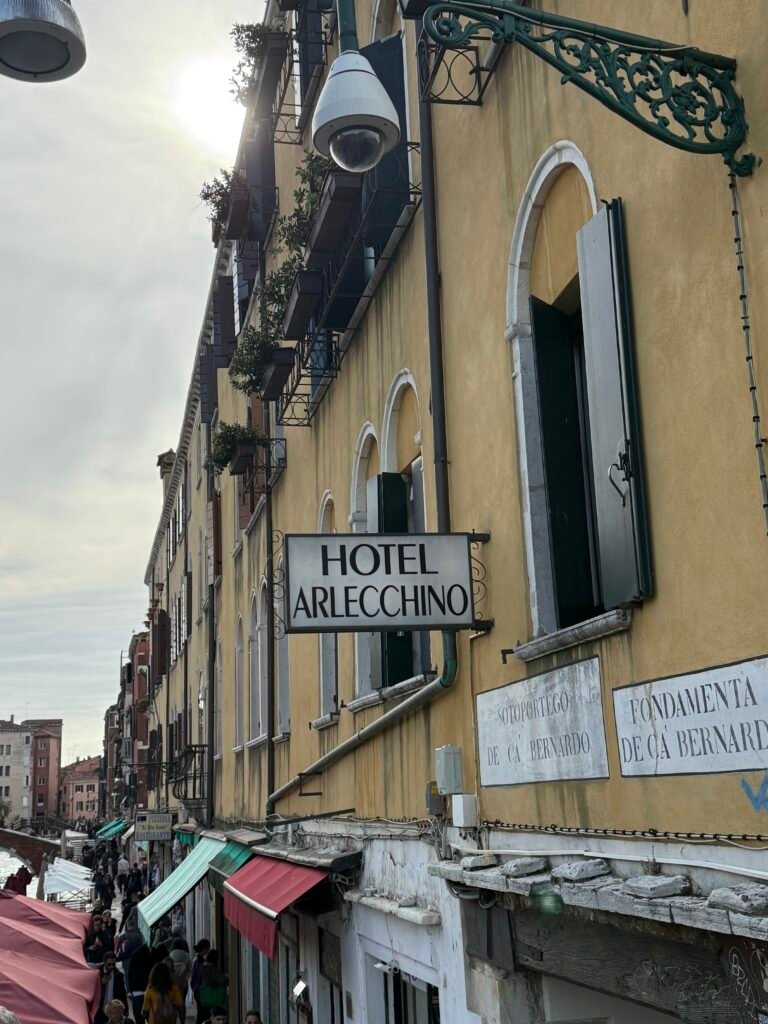
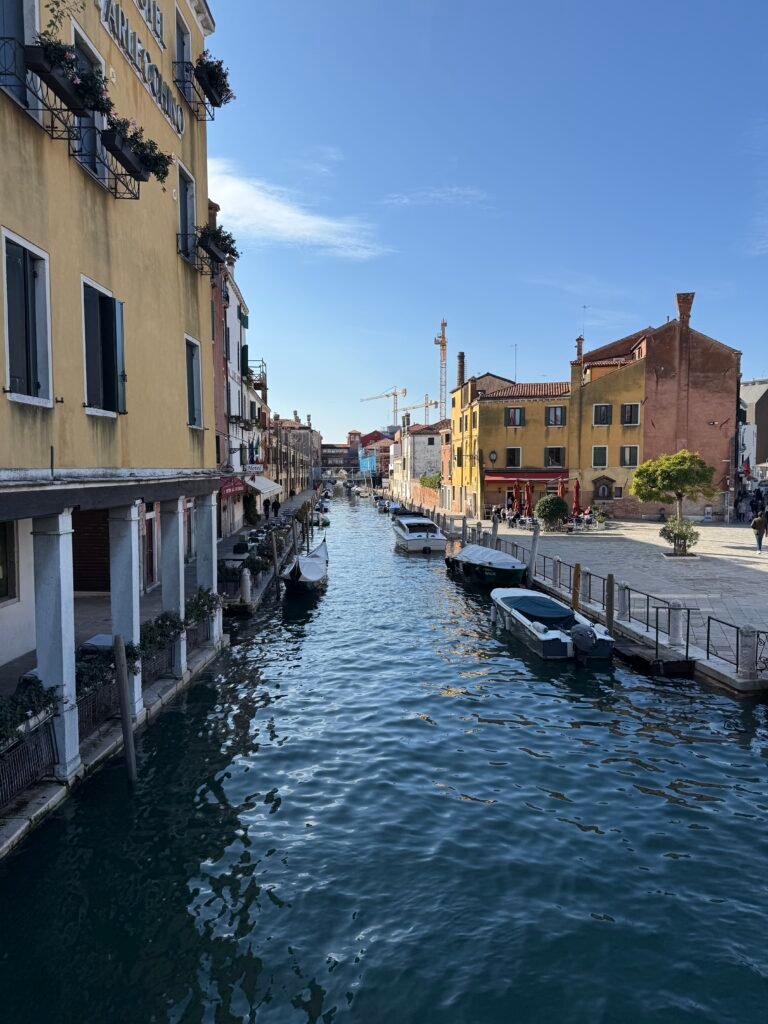
We spent two full days in Venice and managed to see St. Mark’s Square, visit St. Mark’s Basilica and Doge’s Palace, take a boat tour to Murano and Burano, and fit in a gondola ride. We also had a pretty strange experience on our first excursion, which made us appreciate how much better everything else went.
Here’s how we spent our time, what we’d recommend and a few things we wish we’d known before going.
In A Rush? Find Hotel Options Using the Interactive Map.
Day 1: St. Mark’s Square, the Basilica and Doge’s Palace
Getting Around Venice: Our Private Water Taxi
Our hotel arranged a private water taxi to take us to St. Mark’s Square, which was a fun introduction to the city. Rather than figuring out the boat system ourselves on our first morning, we had the hotel coordinate everything for us.
If you’d like to do the same, ask your hotel reception or concierge to arrange a private water taxi. They’ll explain where to meet the boat and coordinate the pickup. It’s a different experience from taking the public water bus, and it was a memorable way to start our visit.
Start at St. Mark’s Square
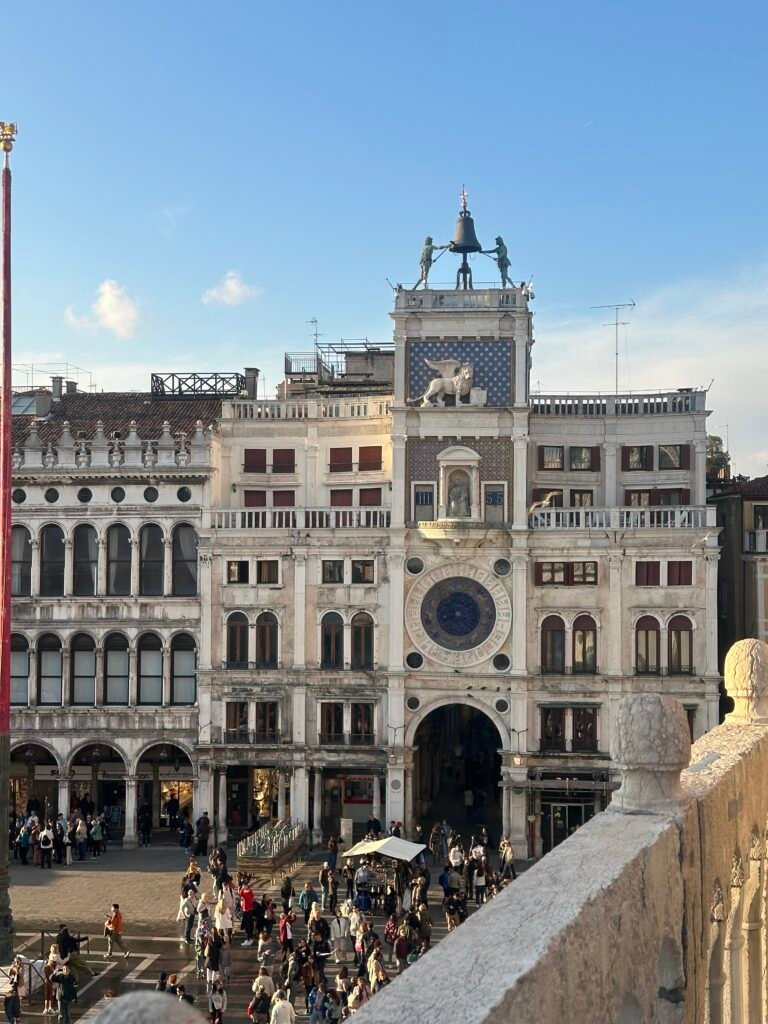
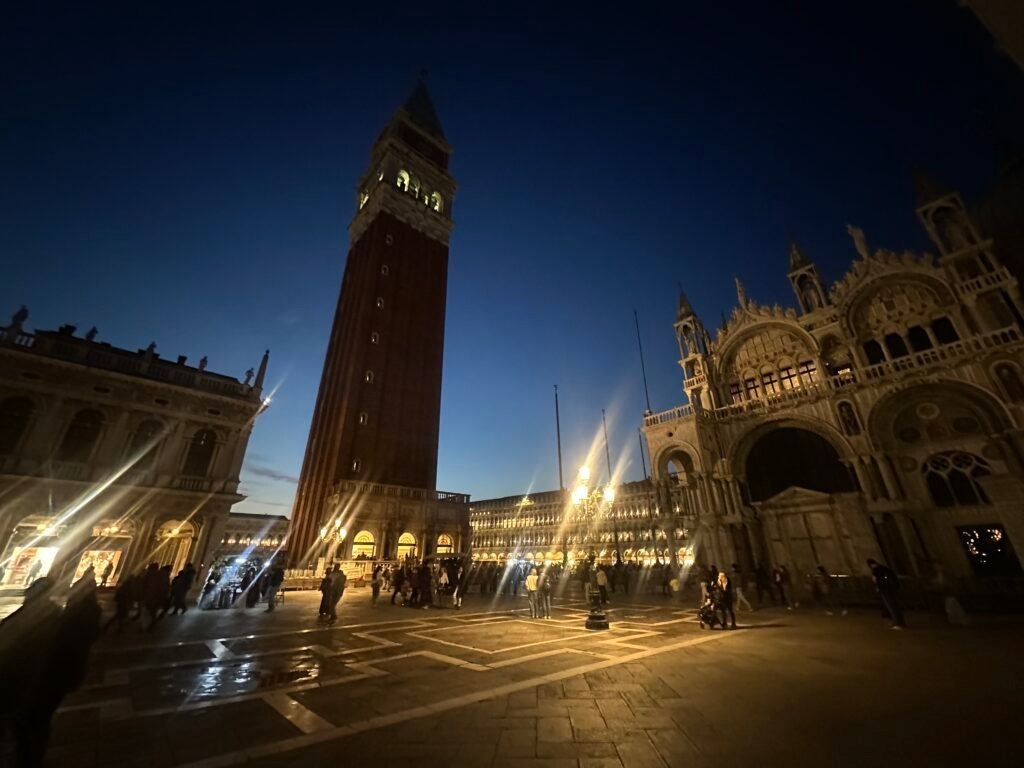
St. Mark’s Square is one of the best places to begin exploring Venice. Several major landmarks surround the square, so you can see a lot in a relatively small area.
As you walk around, look for these details:
- St. Mark’s Basilica: Famous for its Byzantine-influenced architecture, elaborate marble work and golden mosaics covering much of the interior.
- The Campanile: The tall brick bell tower offers panoramic views of Venice and the lagoon. The original tower collapsed in 1902, and the reconstruction reopened in 1912.
- The Clock Tower: Look for the blue-and-gold astronomical clock above the archway leading toward the Merceria shopping street. The clock dates to the late 1400s, and two bronze figures on top strike the bell to mark the hours.
- The columns of St. Mark and St. Theodore: These stand near the waterfront entrance to the Piazzetta and have long been symbols of Venice.
- The Procuratie buildings: The elegant arcaded buildings lining the square once housed senior officials of the Venetian Republic and now contain shops, cafés and other businesses.
One fun detail: St. Mark’s Square is the only place in Venice officially called a piazza. The smaller open spaces throughout the city are generally called campi or campielli.
We started our day here before visiting the basilica and Doge’s Palace, which are both in the same area.
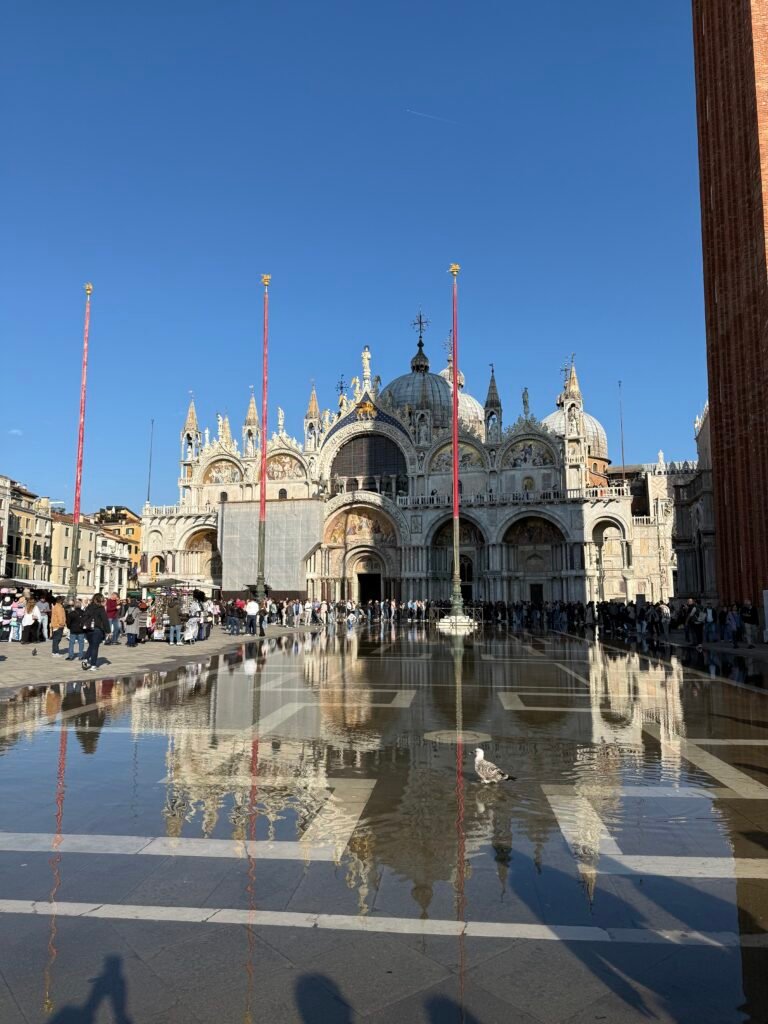
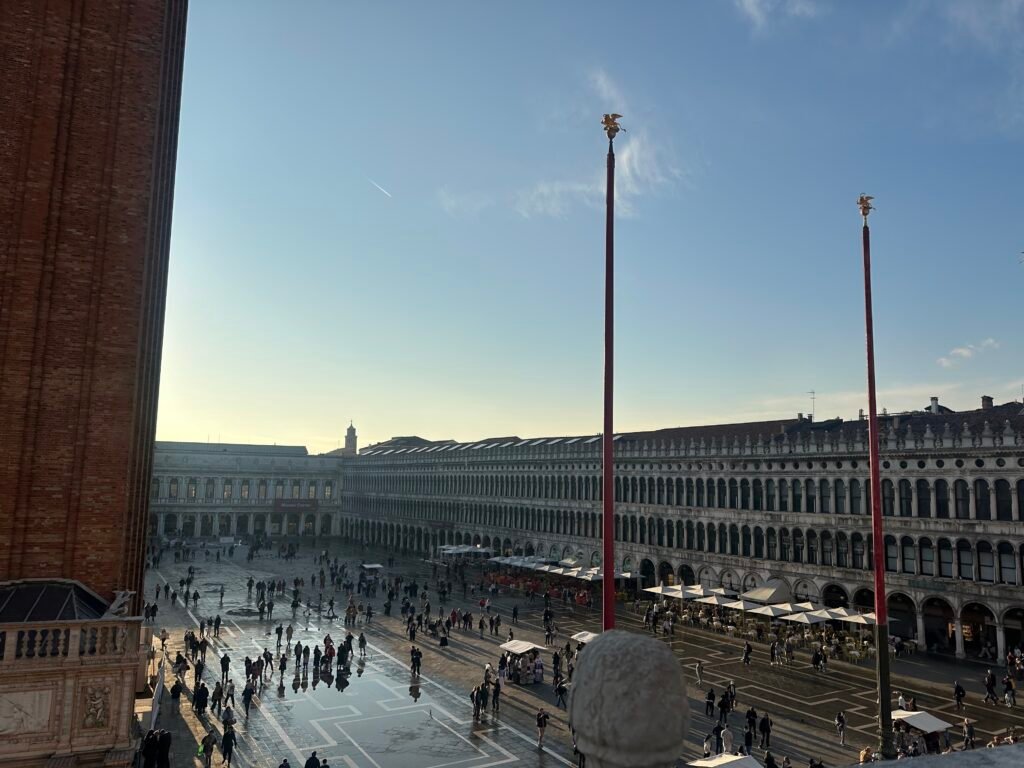
St. Mark’s Basilica: A Beautiful Building, a Very Strange Tour
We booked a guided tour of St. Mark’s Basilica, expecting an easy way to learn about the building. Instead, we spent about 30 minutes trying to figure out where to go because our guide was late.
We visited in October, and there was flooding around the basilica that morning. We were told we needed special boots to get inside, so we bought $10 plastic rain boots. Shortly afterward, the water situation changed and we were able to enter without them.
Once the tour finally started, our guide rushed us through the basilica and disappeared as soon as we got outside. It was a bizarre experience for our very first excursion in Venice.
Fortunately, the basilica itself was beautiful. Its golden mosaics, marble details and Byzantine-influenced design make it worth seeing, even if you don’t book a tour.
My recommendation: Visit the basilica, but think carefully about whether a guided tour is worth it. Based on our experience, I’d consider booking admission and exploring independently.
The St. Mark’s Basilica tour we booked:
See the exact tour we took
Doge’s Palace: Worth Exploring at Your Own Pace
Doge’s Palace was a much better experience for us. We explored without a guide, taking our time through the grand rooms, elaborate artwork, government chambers and corridors.
The palace was once the center of government and justice for the Venetian Republic, so it’s more than just an impressive building.
A few things to look for:
- The Great Council Chamber: This enormous room features Tintoretto’s monumental painting Paradise, one of the palace’s most striking works.
- The Bridge of Sighs: You can admire the enclosed bridge from outside, but the route through the palace also takes visitors inside its passageway, which connected the palace to the former prisons.
- The dungeons: We somehow ended up wandering around the prison areas without knowing where we were supposed to exit. Give yourself time to explore!
We enjoyed the freedom to wander, even when it meant getting a little lost. However, Doge’s Palace is large, and I can see why someone might prefer a guide.
If you’d rather have someone explain the highlights and keep you moving, consider a combined tour of St. Mark’s Basilica and Doge’s Palace that lasts around two hours. Just check exactly what’s included and how much time you’ll spend inside each attraction.
It really comes down to your travel style. We liked exploring at our own pace, but a guided overview could be a better fit if you don’t want to spend hours navigating a large building.
Doge’s Palace tickets and options:
See ticket information
Day 2: Murano, Burano and a Gondola Ride
Take a Murano and Burano Boat Tour
Our Murano and Burano excursion was one of our favorite experiences in Venice. We had a private boat for our small group and a fantastic guide.
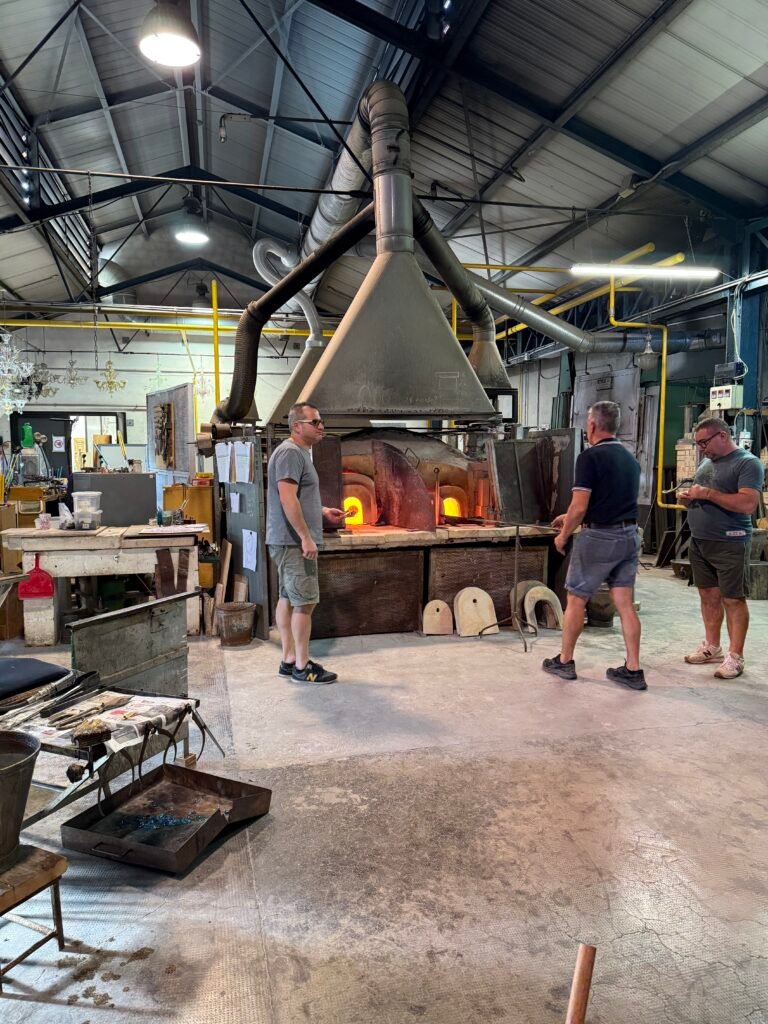
In Murano, we learned about glassmaking and had time to browse the shops. Murano is famous for its glass, and if you’re shopping for a piece to bring home, look for the official Vetro Artistico® Murano trademark and identifying number, which authorized makers can use to identify qualifying glass made on the island.
You may also encounter free demonstrations that lead into a shop visit. They’re worth watching if you’re interested, but don’t feel obligated to buy anything afterward.
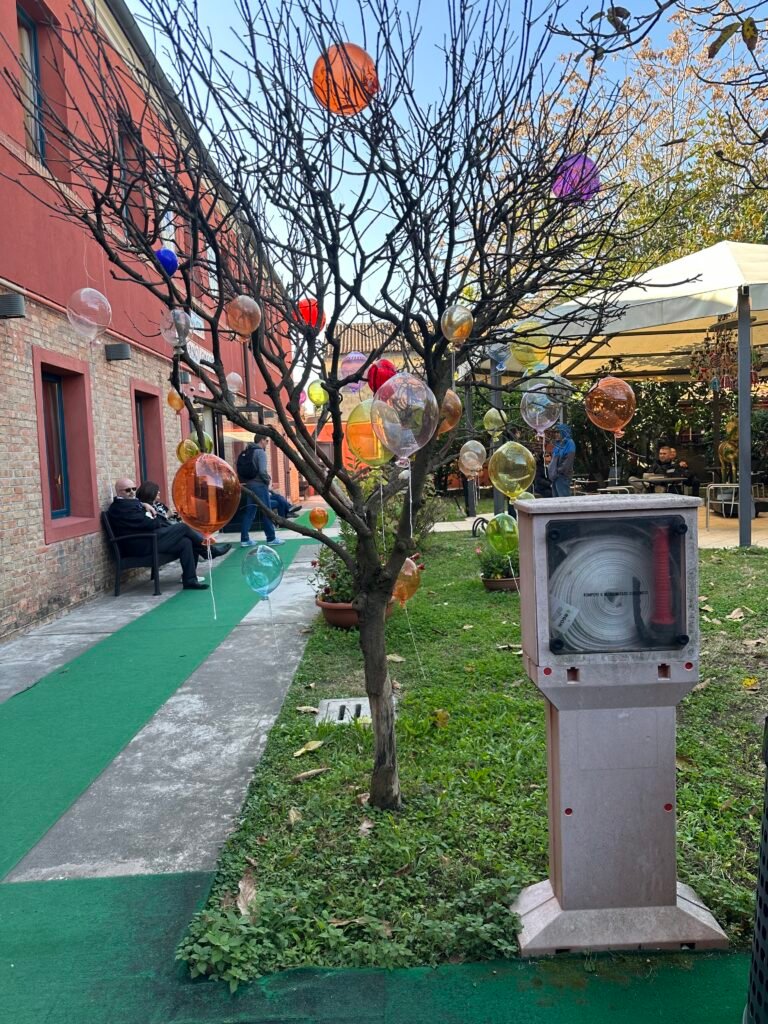
Then we continued to Burano, known for its brightly colored houses and lace-making tradition. I bought a lace handkerchief there and later had it framed. It’s one of my favorite souvenirs from the trip.
If you want to learn more about the island’s lace history, the Lace Museum is housed in the former Burano Lace School. You can also look for traditional local cookies called Bussolà Buranello and Esse in the bakeries.

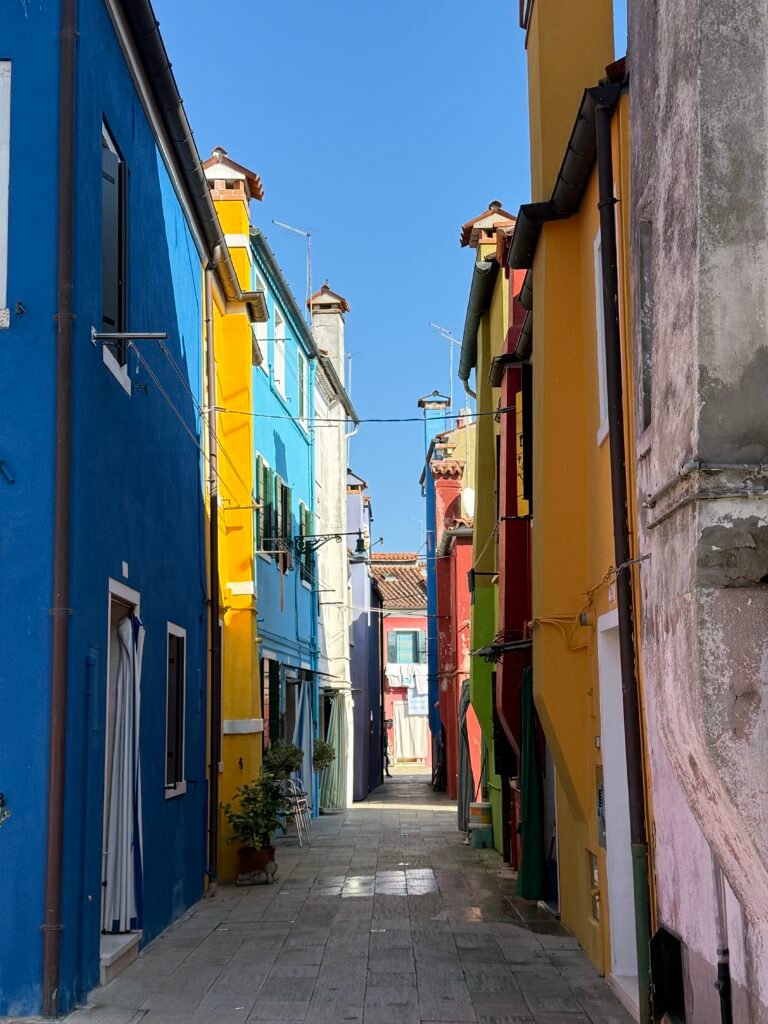
We loved having time to walk around both islands rather than just seeing them from the boat.
The Murano and Burano tour we took:
See the exact tour we booked
What to Check Before Booking
When comparing excursions on Viator or Expedia, look beyond the title. Many tours sound almost identical, but the duration, group size, transportation, free time and included activities can differ considerably.
I noticed some options advertised as visiting both islands in around two hours. That sounds rushed if you want to get off the boat, see the glassmaking process, explore Burano and browse the shops.
Check the total duration and time spent on each island, not just the list of places included. Our small-group tour with a private boat and a great guide was well worth it.
Wander Along the Canals and Browse the Shops
After returning from Murano and Burano, we spent the afternoon walking around Venice, revisiting St. Mark’s Square and stopping at shops along the canals.
This is a good time to leave your itinerary open. Venice has plenty of little streets and waterways that are enjoyable to explore without a specific destination in mind.
Is a Gondola Ride in Venice Worth It?
Yes. It’s touristy, but you’re in Venice. You’re allowed to be a tourist.
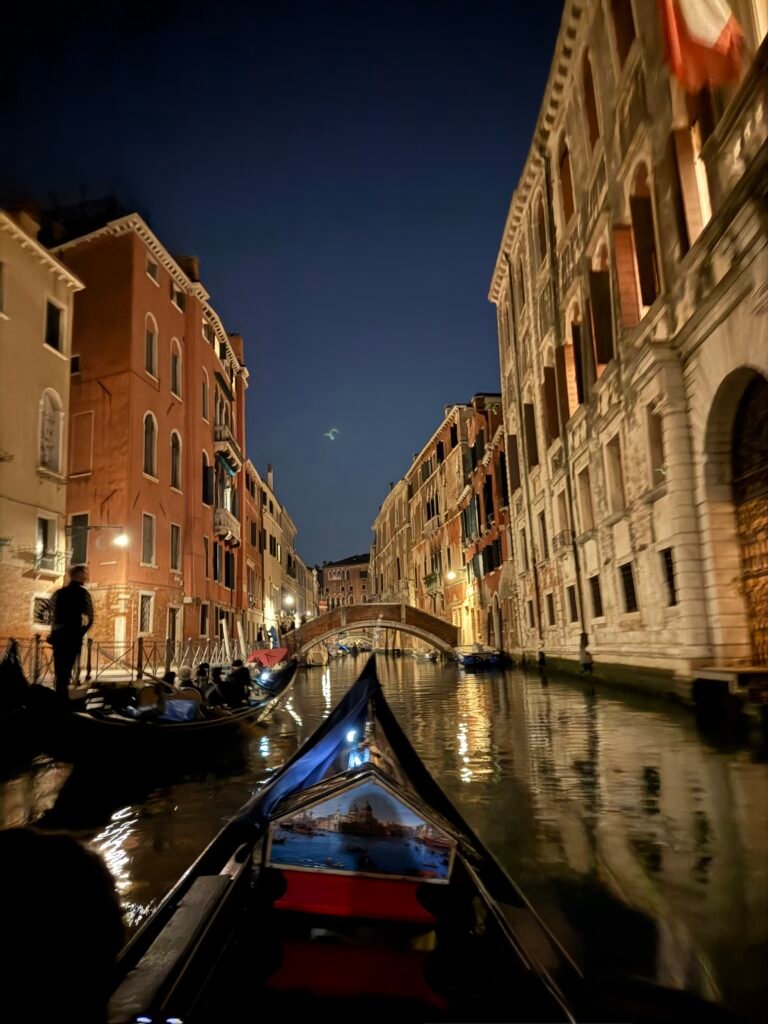
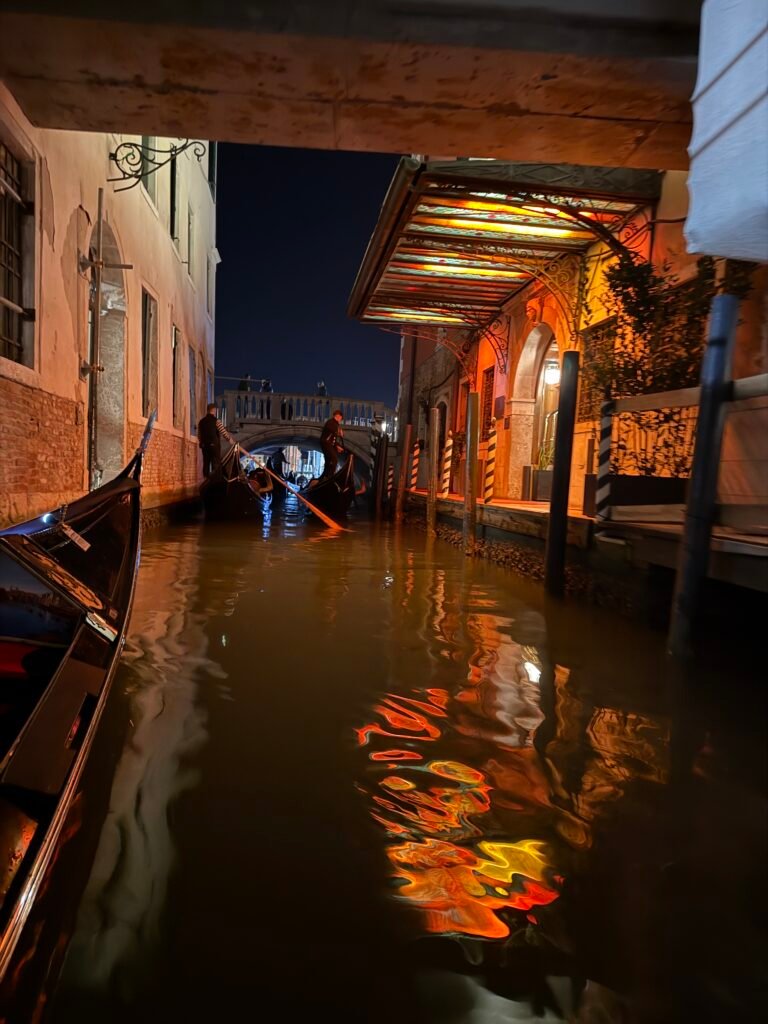
We were glad we did it. Seeing the city from the canals felt different from walking through the streets, and at one point it reminded me of the Venetian Hotel in Las Vegas, except this was the real thing.
Gondola Prices Are Legally Fixed
The standard gondola rates are fixed by the city, so you don’t need to haggle with the gondolier.
The rates are:
- Daytime, 9 AM–7 PM: €90 for a 30-minute ride
- Nighttime, 7 PM–3 AM: €110 for a 35-minute ride
The price is per gondola, not per person, and a standard gondola can carry up to five passengers. If you’re traveling with a group, you can split the price.
You Don’t Have to Book in Advance
For a standard gondola ride, you can walk up to an official gondola station, called a stazio, and ask for a ride.
Booking online may make sense if you want a specific package, such as a shared ride or an experience with music. But you don’t need a third party just to arrange a regular gondola.
Consider Where You Board
Stations near St. Mark’s Square and the Grand Canal can be busy. If you’d prefer a quieter atmosphere, look for a station in a less crowded neighborhood.
Also, a gondola isn’t a water taxi. It’s a sightseeing experience, not a way to get from one destination to another. Don’t be surprised if the gondolier tells you where to sit, either; the boat needs to be balanced properly.
For us, a standard gondola ride was enough. I wouldn’t pay a big premium for extras unless they were something I specifically wanted.
What We’d Do Differently
Our biggest change would be how we booked the St. Mark’s Basilica tour. The building was worth visiting, but our experience with the late guide, unnecessary boot purchase and rushed tour wasn’t.
For Doge’s Palace, I’d choose between a guided tour and exploring independently based on how much history you want explained and how much time you have. We enjoyed wandering at our own pace, even if we did get a little lost.
I’d also take time to compare Murano and Burano tours carefully. The experience was one of our highlights, and I wouldn’t want to rush through both islands just to save a little time.
Is Two Days in Venice Enough?
For our first visit, two full days gave us time for the major sights, an island excursion and a gondola ride, with some wandering in between.
If you’re planning your own trip, I’d set aside one day for St. Mark’s Square, the basilica and Doge’s Palace, and another for Murano, Burano and a gondola ride. Leave some flexibility for shopping and exploring the canals.
Venice is easy to enjoy without scheduling every minute. Just make sure you give Doge’s Palace enough time to find your way out of the dungeons!