Traveling between Venice, Florence, and Rome by train was one of the easiest parts of our Italy trip. Instead of dealing with rental cars, driving in unfamiliar cities, or figuring out parking, we could sit back, enjoy the views, and get to our next destination.
Before our trip, I had a few questions about how train travel in Italy actually worked. Which train company should we use? How early should we arrive? What do we do with our luggage? And how do we find the right platform?
After taking high-speed trains between Venice and Florence and then Florence and Rome, I found the process much simpler than I expected. Here’s what I learned, along with a few practical tips to help you plan your own trip.
In a Rush? Use the Interactive Map to Find Hotel Options in Italy!
1. Choose Between Trenitalia and Italo
Italy has two main high-speed train operators: Trenitalia and Italo. Both offer routes connecting major cities, including Venice, Florence, and Rome.
- Trenitalia: Visit the official website
- Italo: Visit the official website
We booked our tickets through a third-party booking website and ended up traveling with both operators during our trip. I don’t remember which company we used for each leg, but both journeys were straightforward.
When comparing tickets, look at the departure time, arrival time, price, and station locations. You may see different prices and journey times depending on the train you choose, so compare a few options before booking.
I recommend booking once your itinerary is set, especially if you’re traveling during a busy period. Having your tickets arranged ahead of time means one less thing to worry about while you’re on vacation.
2. Know Which Train Stations to Choose
One of the most important things to check when booking your tickets is the station. Italy’s larger cities can have multiple train stations, and choosing the wrong one could add unnecessary travel time to your day.
Here are the main stations to look for on a Venice-to-Florence-to-Rome itinerary:
Venice: Venezia Santa Lucia
Venezia Santa Lucia is the main train station in historic Venice, right on the island. Venezia Mestre is on the mainland, so make sure you check which station is listed on your ticket before booking.
Florence: Firenze Santa Maria Novella (SMN)
Firenze Santa Maria Novella is the main station in Florence and is conveniently located near the historic center. This is the station you’ll generally want for a typical Florence sightseeing itinerary.
Rome: Roma Termini
Roma Termini is Rome’s main train station and a convenient arrival point for many visitors. Some trains also stop at Roma Tiburtina, so double-check your destination station and how you’ll get to your hotel.
Before booking, I would also look at the location of your hotel in relation to the station. A ticket that arrives a little earlier isn’t necessarily the most convenient option if it leaves you farther from where you’re staying.
3. How Long Does the Train Take Between Cities?
One of the best things about traveling around Italy by high-speed train is how quickly you can move between major destinations.
These are approximate travel times for direct high-speed trains. Your exact journey will depend on the departure you choose.
| Route | Approximate travel time |
|---|---|
| Venice to Florence | 2 hours to 2 hours 15 minutes |
| Florence to Rome | 1 hour 30 minutes to 1 hour 40 minutes |
| Venice to Rome | Around 3 hours 45 minutes |
We took morning trains between our destinations. This worked well because it gave us time to get settled and explore after arriving in the next city.
When planning your itinerary, remember that the train ride isn’t the only part of the journey. You’ll also need time to get to the station, board, travel to your hotel, and drop off your luggage.
For a trip with only a few days in each city, taking an early train can help you make the most of your time without spending an entire sightseeing day in transit.
4. How to Book Your Tickets
You can book directly through Trenitalia or Italo, or use a third-party booking website to compare options and purchase tickets.
We used a third-party website, but you don’t have to use one. Booking directly through the train operator is another option, and it allows you to see the operator’s available routes and ticket conditions.
When booking, make sure you check:
- Your departure and arrival stations. Confirm the station names rather than relying only on the city name.
- Your travel date and departure time. Make sure the train fits your itinerary.
- The ticket conditions. Change and cancellation rules can vary by fare.
- Your seat information. High-speed tickets generally include an assigned seat.
Once you’ve booked, keep your ticket accessible on your phone. We used digital tickets, so we didn’t need to worry about printing anything. Just make sure your phone is charged and that you can access your ticket when needed.
High-speed tickets are generally tied to a specific departure, so don’t assume you can simply board a different train if you miss yours. Check the conditions of your ticket before traveling.
5. What to Expect at the Train Station
I was pleasantly surprised by how easy it was to navigate the train stations. We found our platforms, located our assigned seats, and boarded without any trouble.
Here’s how to make the process easier.
Arrive early enough to find your train.
I recommend arriving around 15–30 minutes before departure. This gives you time to find the departure boards, check your platform, and get to the train without rushing.
Check the departure board.
Look for the word Partenze, which means departures. Find your train using the departure time and train number listed on your ticket. The platform may be listed as binario, which means track or platform.
Don’t rely only on the time. If several trains are leaving around the same time, checking the train number helps you make sure you’re heading to the right one.
Find your platform and board.
Once your platform is displayed, follow the signs to the correct track. When the train arrives, check the carriage and seat information on your ticket.
Our boarding experience was easy. We found our seats and settled in without any major confusion.
One important reminder: keep an eye on your belongings while you’re in the station. Busy train stations can attract pickpockets, and it’s easy to become distracted while checking departure boards or managing your luggage. More on that below!
6. What Is the Train Ride Like?
The train rides themselves were comfortable and gave us a chance to relax between destinations.
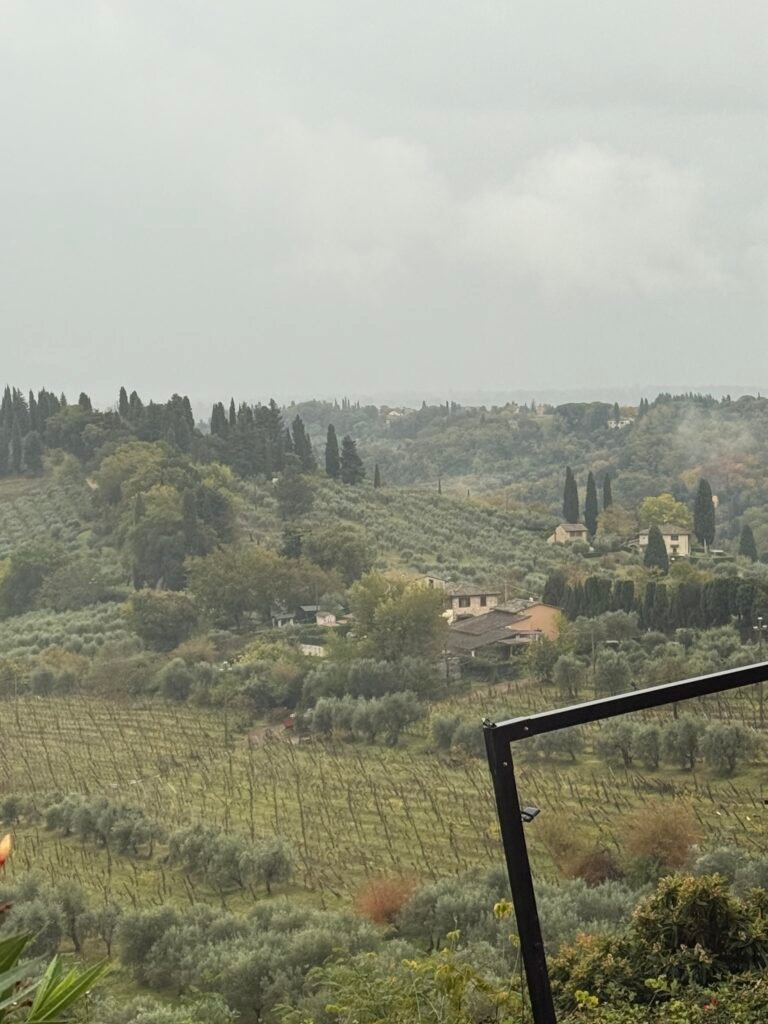
We had nice views along the way, which made the journey part of the experience rather than just a way to get from one city to another.
Staff also came through the train offering snacks. We didn’t buy anything, but it was nice to know that refreshments were available. Our trains also had restrooms on board, which came in handy during the journey.
You don’t need to plan every minute of the train ride. Once you’ve found your seat and stored your luggage, you can relax, look out the window, or catch up on your plans for the next city.
7. What About Luggage on Italian Trains?
If you’re traveling between multiple cities, there’s a good chance you’ll have suitcases with you on the train.
We had a mix of luggage storage options during our journeys, so I wouldn’t count on one specific storage arrangement. The important thing is to be prepared to manage your own bags when you board.
A few things to keep in mind:
- Choose luggage you can comfortably lift and move.
- Keep smaller valuables and essentials in a bag you can keep close.
- Pay attention to where you place your bags, and make sure you can keep track of them.
- Check your train operator’s current luggage rules if you’re bringing particularly large or bulky items.
You’ll also want to think about what you’ll do when you arrive. We were able to drop off our luggage at our accommodations and start exploring, which made our travel days feel much more productive.
In Florence, we stayed at Hotel Alessandra. After arriving, we dropped off our luggage and had time to explore the city. In Rome, we took a taxi from the station to TriviHo Luxury Hotel and dropped off our bags before continuing with our plans.
It’s worth checking with your hotel in advance to see whether you can leave your luggage before check-in. That small detail can make a big difference when you’re trying to fit sightseeing into a travel day.
8. Tips for Taking the Train in Italy
These are a few practical things I’d keep in mind when traveling by train in Italy.
Watch your luggage and belongings at the train station.
Pickpockets can target busy stations, especially when travelers are distracted by departure boards, tickets, and luggage. Keep your bags close, stay aware of your surroundings, and don’t leave your phone in your back pocket. Keep your valuables somewhere secure rather than in an easy-to-reach pocket.
Bring a few euros for station restrooms.
Restrooms at train stations may charge a few euros to use, so don’t assume they’re free. It’s worth keeping a little cash handy in case you need to use one before boarding.
Remember that restrooms on the train are free to use with your ticket.
Our trains had restrooms on board, and we didn’t have to pay an additional fee to use them during the journey. If you need to go while traveling, you can use the restroom on the train instead of paying for one at the station.
Leave a buffer for delays.
Train delays can happen, so avoid scheduling a tour or excursion too close to your scheduled arrival. Give yourself enough time to get off the train, collect your luggage, and reach your meeting point.
If you’ve booked an excursion that you really don’t want to miss, consider scheduling it for another day rather than squeezing it into your arrival window. A little extra breathing room can save you a lot of stress.
9. Is Taking the Train in Italy Worth It?
For our trip, absolutely. Traveling by high-speed train between Venice, Florence, and Rome was straightforward and let us spend more time enjoying the cities instead of worrying about transportation.
We booked our tickets ahead of time, took morning trains, used digital tickets, and found the stations easy to navigate. Once we were on board, we could relax and enjoy the views before arriving at our next destination.
If you’re planning to visit multiple Italian cities in one trip, I’d seriously consider taking the train. Just make sure you choose the right stations, give yourself enough time to board, keep your belongings secure, and leave some flexibility in your schedule.
It’s a practical way to see more of Italy without having to drive between destinations.