Planning a trip to Italy can feel a little overwhelming, especially when you only have one week and somehow want to see everything. We knew we wanted to visit Venice, Florence and Rome, but we didn’t have enough time to spend a full week in each city. Instead, we flew into Venice, took the train to Florence, continued on to Rome and flew home from there.
It was definitely a busy week, but we were able to see all three cities and fit in a full-day trip through Tuscany. If you’re trying to figure out how much you can realistically see in Italy in one week, this is how we did it.
Our Route at a Glance
Day 1: Arrive in Venice + St. Mark’s Square
Day 2: Murano + Burano + Gondola Ride
Day 3: Venice to Florence
Day 4: Tuscany Day Trip
Day 5: Florence to Rome + Vatican
Day 6: Colosseum + Roman Forum + Pantheon + Trevi Fountain
Day 7: Explore Rome at our own pace
Day 8: Fly home
We had our trains, major attractions and tours planned ahead of time, which allowed us to fit quite a bit into the week while still having time to walk around and explore.
Day 1: Arriving in Venice
We landed in Venice in the morning and took a taxi to Hotel Arlecchino in the Santa Croce area near Piazzale Roma. After dropping off our luggage, we were ready to head out and start exploring.
If you have never been to Venice before, getting around takes some getting used to. Piazzale Roma is basically where the roads end, and from there you’re traveling by foot or by boat. Since we were staying near Piazzale Roma, our hotel arranged a private water taxi for us to take us to St. Mark’s Square. It was our first water taxi experience and a great way to get our first look at Venice from the water. For the rest of the trip, we used the public water taxis, which were much cheaper.
St. Mark’s Square was our first real stop, and there was plenty to see. The square is surrounded by St. Mark’s Basilica, the Campanile, Doge’s Palace and the blue and gold Clock Tower, with shops and cafes around the edges.
We had booked a tour of St. Mark’s Basilica ahead of time, which turned into one of the more ridiculous stories of the trip.
It was October, and the square was flooded. Our tour guide told us we needed to buy plastic rain boots from one of the street vendors because the water was covering the entrance to the basilica. They were about $10 per person, so we bought them.
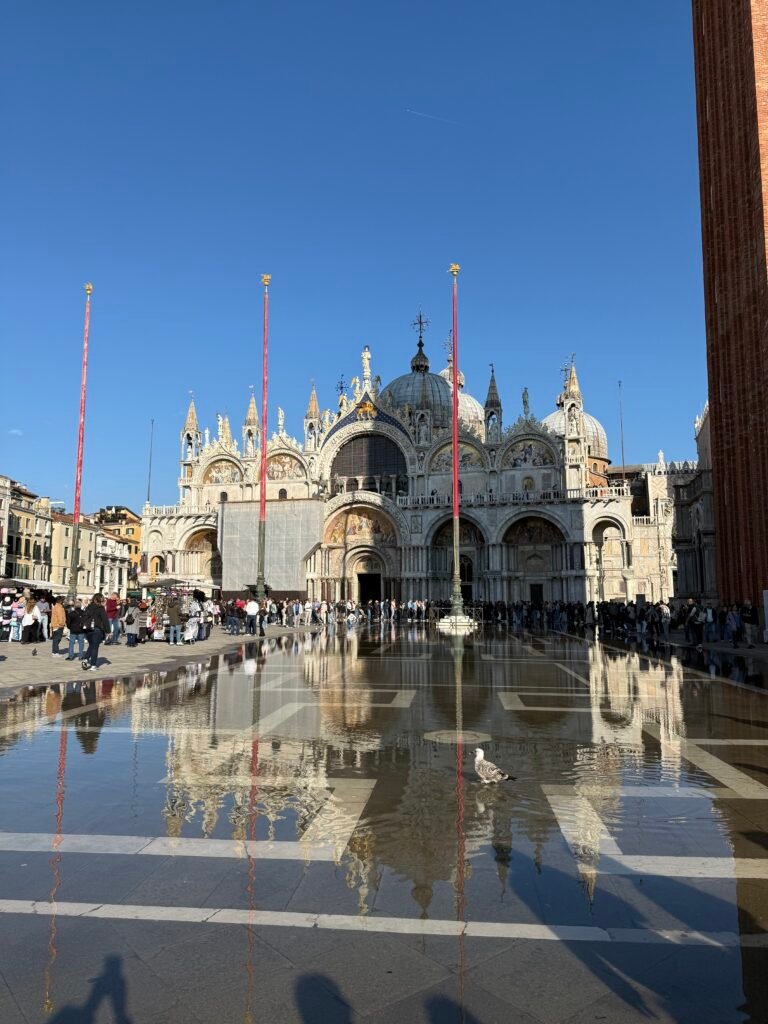
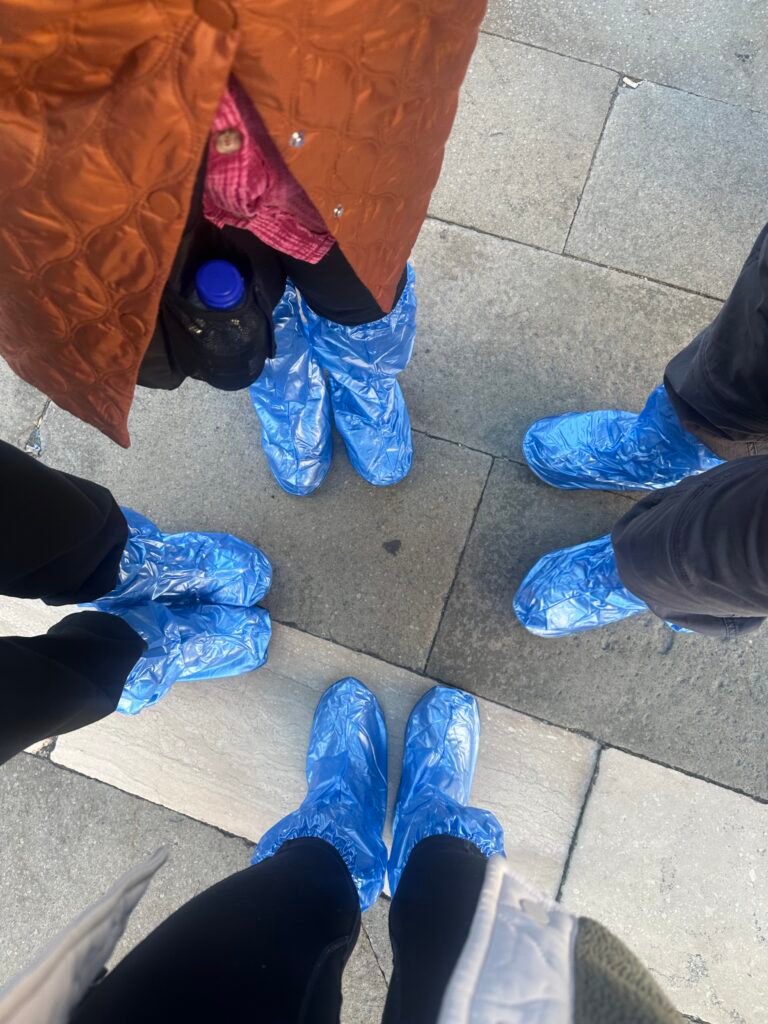
Then we got to the entrance and were told we couldn’t go in because of the water.
Someone eventually lifted a board and the water drained away. A few minutes later, the entrance was clear and we were allowed inside. So there we were, standing there with our brand-new $10 plastic rain boots that we absolutely did not need.
This was probably the one and only tourist scam we fell for.
The basilica itself was beautiful, but honestly, the guided tour wasn’t worth it for us. Our guide didn’t share much information, rushed through everything and then left. If we were doing it again, we would buy tickets ahead of time and walk through on our own.
Doge’s Palace was a different story. We explored it without a guide and really enjoyed walking through the huge rooms, artwork and government areas. The palace is much bigger than we expected, and at one point we just kept walking without really knowing how much more there was to see.
Eventually, we ended up in the basement dungeons.
Then we realized we had no idea where the exit was.
If you visit Doge’s Palace, give yourself plenty of time. You may think you are almost done and then find yourself wandering through another section of the building.
Day 2: Murano, Burano and a Gondola Ride
The next day, we took a public water taxi to meet our tour group for a trip to Murano and Burano. This ended up being one of the best excursions of the entire trip.
It was a small group, and we had a private boat for our group. Our guide was also fantastic. She actually explained what we were seeing and gave us history along the way, which made the experience much more interesting.
Our first stop was Murano, which is famous for its glassmaking. We watched an artisan heat and shape the glass into a finished piece right in front of us. The speed and skill were impressive, especially watching something go from a blob of hot glass to an actual piece of art in just a few minutes.
There was also a shop with everything from earrings and small figures to larger pieces of artwork. If you want to bring home something unique, this is a good place to look for something actually made in Murano.
Next, we went to Burano, which is known for its brightly colored houses.
There are a few stories about why the houses are so colorful. One is that Burano was historically a fishing community and the different colors helped families identify their homes, especially when fishermen were returning through the lagoon. There is also a more entertaining local story that fishermen would sometimes come home after drinking and accidentally walk into the wrong house, so the different colors helped them find the right one. That one is more folklore than fact, but we liked it better.
Burano is also known for its lace. We saw women making incredibly detailed lace by hand, which made us appreciate how much work goes into it.
We bought a lace handkerchief while we were there and eventually had it framed. It ended up being one of our favorite souvenirs from the trip because it is something we can actually display and it reminds us that it came from Burano.
After the islands, we went for a gondola ride. Before going to Venice, our only real experience with anything Venetian was the Venetian hotel in Las Vegas, so being on the actual canals gave us a funny sense of déjà vu. The canals, bridges and buildings looked familiar, but obviously the real thing was much better.
We definitely recommend doing a gondola ride at least once. Yes, it is touristy. You’re in Venice. You’re allowed to be a tourist.
Afterward, we walked around the shops and eventually stopped for dinner. We had pizza with French fries on it.
It tasted exactly like what you would expect pizza with French fries on it to taste like, and we have absolutely no regrets.
Day 3: Venice to Florence
The next morning, we packed up and headed to the train station.
Our hotel was able to arrange for someone with a luggage cart to help take our bags to the train, which made things much easier. We took the train from Venice to Florence and arrived with most of the day still ahead of us.
After checking into our hotel and dropping off our luggage, we started exploring. Florence is very walkable, so we spent a lot of time just walking through the streets, piazzas and historic neighborhoods and stopping in shops along the way.
The Duomo and Giotto’s Bell Tower are hard to miss. You can climb the bell tower if you want to, but there are 414 steps. We didn’t climb it, but looking back, we wish we had. It would have been a great way to see Florence from above.
One thing we did make sure to see was Michelangelo’s David at the Accademia Gallery. If it is your first time in Florence, we would definitely recommend it. The statue is enormous, and seeing the amount of detail up close is impressive. We booked a tour to see David and thought it was worth it.
We also booked a separate tour of the Baptistery of St. John, which was worth seeing as well.
Later, we walked over to Ponte Vecchio, Florence’s famous stone bridge over the Arno River. The bridge is lined with jewelry shops, and it was especially pretty in the evening.
Florence is also known for its leather goods, especially leather bags. There are shops all over the city, so take a look around before buying anything because the quality and prices can vary.
Later, we walked over to Ponte Vecchio, Florence’s famous stone bridge over the Arno River. The bridge is lined with jewelry shops, and it was especially pretty in the evening.
Florence is also known for its leather goods, especially leather bags. There are shops all over the city, so take a look around before buying anything because the quality and prices can vary.
Day 4: Tuscany Day Trip
Our Tuscany excursion was probably the best day trip of the entire vacation.
We booked a full-day tour that took us to Siena, San Gimignano, Pisa and a winery. Our guide was great and shared a lot of history throughout the day, which made the stops much more interesting.
Siena was our favorite stop. The city had so much character, and we really enjoyed walking around and seeing the different neighborhoods.
Siena is divided into 17 historic neighborhoods called contrade. Each one has its own identity, symbols and traditions, and there is a lot of pride attached to which contrada you belong to. The city is also home to the Palio, a famous horse race held twice each summer in Piazza del Campo.
We could have spent a lot more time in Siena.
We also visited San Gimignano, a medieval hill town known for its towers. It is much smaller than Florence and easy to explore on foot, with historic squares, shops, restaurants and plenty of places selling pottery, leather goods and other handmade items.
San Gimignano once had 72 towers, although only 14 remain today. It is sometimes called “Medieval Manhattan” because of its skyline.
Our tour included a winery stop, but we decided to skip that part and arranged to be dropped off early in San Gimignano so we could have more time to explore the town.
If wine is a big part of your trip, you may want to stay with the tour. If you are more interested in exploring the towns, having that extra time can be worth it.
San Gimignano is also known for its gelato, and Gelateria Dondoli is one of the town’s most famous gelato shops. It is a must-visit stop when you are in San Gimignano, and there was a line when we went. We waited and tried it, and it definitely lived up to its reputation.
Of course, it also started raining.
This was finally the moment when those $10 plastic rain boots from Venice came in handy.
After San Gimignano, we headed to Pisa and the Square of Miracles. The Leaning Tower, Cathedral, Baptistery and Camposanto are all right next to each other, so we were able to see quite a bit without having to walk all over the city.
We bought an extra ticket to climb the Leaning Tower, and we’re glad we did.
The staircase is narrow and steep, and there isn’t much to hold onto. You can definitely feel the angle of the tower as you climb. If you are uncomfortable with heights or tight spaces, you may want to skip the climb. Otherwise, we thought it was worth doing.
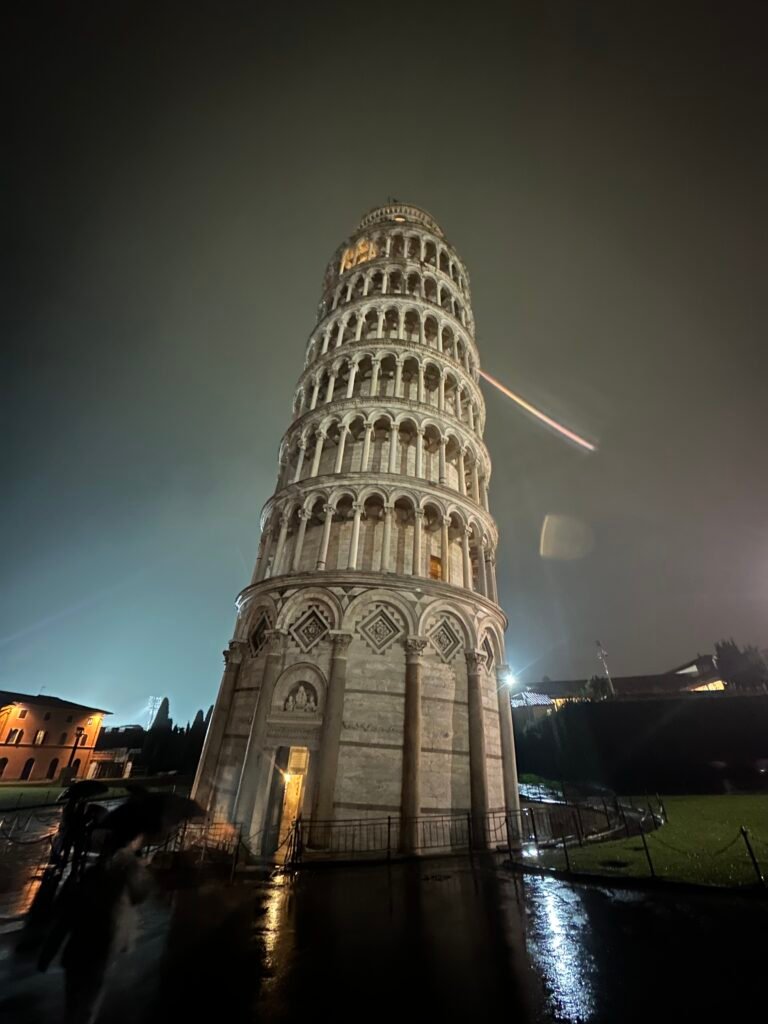
If you don’t want to climb, there is still plenty to see in the square and, of course, plenty of opportunities to take the classic leaning tower photos.
The entire day was long, but we made it back to Florence that evening.
Day 5: Florence to Rome + The Vatican
The next morning, we packed up again and took the train from Florence to Rome.
After checking into our hotel and dropping off our luggage, we headed out for our Vatican tour.
This was one place where we were glad we had a guide. The Vatican Museums are huge, and there is so much to see that it would have been easy to walk through without really knowing what we were looking at.
There were a lot of tour groups, though, so it could get loud and crowded. Our guide also had an accent that was sometimes difficult for us to understand, so we definitely missed some of what she was saying.
Even with that, we were glad we booked the tour. Our guide kept us moving through the museums and pointed out the important things along the way instead of leaving us to figure everything out ourselves.
There are rooms filled with artwork, sculptures, tapestries and historical pieces. We were also surprised by how many statues and references to ancient Greek and Roman gods and mythology were throughout the museums.
Eventually, we made our way to the Sistine Chapel, including Michelangelo’s famous ceiling and the Creation of Adam.
You cannot take photos inside, and it was very crowded, but seeing it in person was still something we were glad we did.
Day 6: The Colosseum, Roman Forum, Pantheon and Trevi Fountain
For our next full day in Rome, we booked a walking tour that included the Colosseum, Roman Forum and Palatine Hill.
Book your Colosseum tour ahead of time.
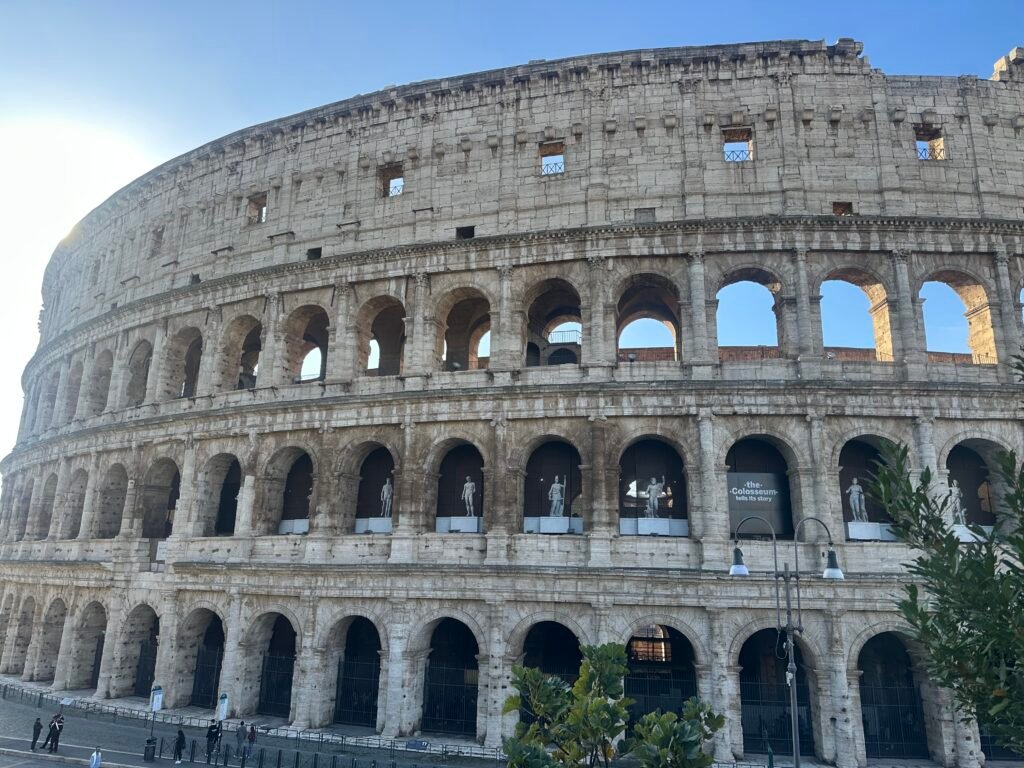
The tour was helpful because our guide explained what we were looking at and how the different areas were used instead of us just walking around a bunch of ruins trying to figure everything out ourselves.
We spent time inside the Colosseum and then walked through the Roman Forum and Palatine Hill.
Later, we made our way to the Pantheon. The building itself is incredible, especially the huge dome and the opening at the top, known as the oculus. There are also tombs inside.
We ended the day at the Trevi Fountain, where we wandered around the surrounding shops and restaurants.
And, of course, got more gelato.
Get the gelato.
Day 7: A Day to Explore Rome
By this point, we had already seen most of the major attractions we wanted to visit, so we intentionally left our last full day open.
We liked having a day without a strict itinerary. We could walk around, shop, stop somewhere if we saw something interesting and decide what we wanted to do as we went.
We visited the National Monument, took the obligatory photo at the Spanish Steps and spent plenty of time wandering around the city.
And, naturally, there was more gelato.
We had also reached our limit on pizza and pasta. We’re not huge foodies, so after several days of eating whatever was convenient while we were out exploring, we wanted something different.
That something different ended up being McDonald’s.
Honestly, it hit the spot.
No regrets.
Day 8: Heading Home
The next morning, we packed our bags and headed to the airport.
A week obviously isn’t enough time to see all of Italy, but it was enough time for us to visit Venice, Florence and Rome and still fit in a full day through Tuscany.
It was a busy trip, but we never felt like we spent the entire week sitting around waiting for the next train or tour. We saw a lot, had some very memorable experiences and still had time to wander around without a plan.
For us, the biggest thing was having the major parts of the trip planned ahead of time while still leaving room to enjoy the cities once we got there.
There were plenty of moments we still laugh about, from buying $10 rain boots in Venice that we didn’t need, to somehow ending up in the dungeons of Doge’s Palace, to finally getting some use out of those same rain boots in San Gimignano.
And then there was McDonald’s.
You don’t have to see everything to have a great first trip to Italy. In one week, we were able to see three completely different cities, spend a day exploring Tuscany and still have plenty of time to wander around and enjoy being there.
And whatever you do, leave room for gelato.